
“We all have an impact on each other. We are all connected in so many seen and unseen ways, Which possibly explains why one of the simplest and quickest routes to happiness seems to be to make someone else happy. The reason to be selfless is selfish. Nothing makes ourselves feel better than not thinking of ourselves.”
-Matt Haig
I’ve been thinking a lot about connection in the last few days. We talk about how connection is the opposite of addiction. How we need to stay connected to stay well. But why?
Why does staying connected work?
Psychologists will tell us that as a society we need to stay connected at a rudimentary level, to grow as a community. In the very beginning Social groups that hunted together, that travelled together, thrived. The community provided protection and sustenance. We pooled our resources for the common good. As we evolved and became more ‘civilised’, then our needs changed, but the collective need to protect, feed, support stayed. The villages continued to raise the children; the communities continued to provide for the collective benefit. We have lost some of these collective needs as we have moved to more modern days – but the need for connection remains.

A few decades ago, we still had to physically connect. Without the ease of cell phones and technology, we used to gather at work, in sports teams, socially at bars or at other’s houses. Meeting face to face to keep those connections alive. Some of that physical connection has been lost with modern technology; and I think we need to be really aware of how we use it. (I know this is ironic as we meet over zoom; but it is easier than ever to isolate, and yet believe we are connected. It is the quality of the connection that matters, not the ease or the quantity)
So why does maintaining connection work?
When we are connected with others who are similar to us, we find support through understanding and non-judgement. (not all connections are good for us, but healthy ones help us thrive.)
For those of us who live in our heads, we may not be getting the best of advice. We may think we know best, but actually we are in a tiny echo chamber of one where we can reinforce the worst of behaviours. Without an outside influence to snap us out of it, we can spiral; believe the unbelievable and generally come out worse off.
Healthy connections can short circuit all of that. Getting a second opinion on a situation might be the thing that turns you around.
Healthy connections can be shown to improve morale; reduce depression and raise self-esteem. All the brilliant things.
So why, with all of this amazing evidence, do we disconnect?
Why do our minds like to isolate us??? This is a very good question, and once someone finds the answer I will share it with you lol
There is of course a lot of evidence that our addictions and depression, know they survive better when we are isolated, so they influence our choices. The old addiction doing press ups in the courtyard analogy. I can remember one of my first light bulb moments was someone telling me, my depression was always hanging around waiting for a chink in my armour to sneak back. Like physical viruses, Mental illnesses and addiction, constantly evolve to find a way back in.
So staying connected with people who understand, who are empathetic, who have walked a similar path as our own, provide a protection from those things waiting to trip us up.
The Connections we make with people who have a similar purpose to our own, strengthen our ability to grow and recover. Just like Gym buddies, who cheer us on with weight training or exercise, recovery buddies, will teach us their tricks and encourage us to find our own.

Staying connected builds resilience. “Not today Satan”, is much easier when you have people around you. People who see your strengths and your value, who will tell you the truth, and who will build you up.
I am a sucker for isolating. Like some injured wolf, I will slink off and lick my wounds. But all that does is increase the chance of infection and everything getting worse
Sometimes we isolate, because we think nobody is interested, or that we are a burden. That others are bored of the dramas we have – but those thoughts are merely our addictions/diseases trying to get the better of us. I turn the narrative around, by asking myself if I would turn anyone else away who came to me with the same thoughts? And of course I wouldn’t.
Part of recovery is overriding that default self-hatred setting. That “I’m too much trouble” thought. Re-enforcing you are worth every one’s time and input, will help us stay connected. If we feel worthy of connection, we will stay connected.
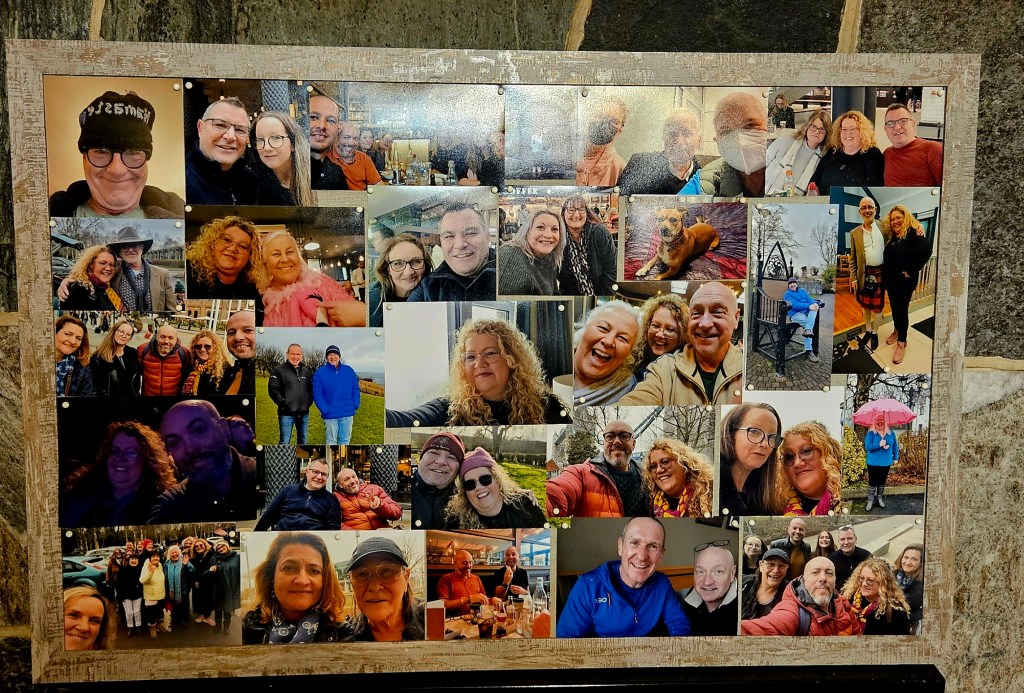
Recovery is all about stopping the substance/behaviour abuse and then it is about healing and growing. And staying around a community of people who “Get” all of that will ensure that you continue to recover and continue to grow.
Connection also distracts you from all that self-absorption. Being an active part of a community encourages you to look out and find others who need the kind of support you can offer. Acting selflessly heals poor self-esteem. Giving out slows you looking in. Giving love and understanding helps you find your own worth…
We need to also be aware of bad connections. I have found that the longer in recovery the more I inventory the connections I have in my life. Sorting through the connections that are unhealthy for me, and using boundaries, helps me to grow and stay well… clearing your ph of dealers, enablers and suppliers is a very good first step…
Finding a group of likeminded, gives you not only their advice, understandings and love, but another set of perspectives to call back on… I know that in the next wee while, when I’m faced with a challenge, I will stop and think “what would Meg have advised me”; our connection giving me a new view of the world and a new set of tools to use….
Hononga
Ehara taku toa i te toa takitahi, engari he toa takitini
Connection
My strength is not that of an individual, but that of many
 Food for the soul - welcome to my world